Going Through My Holdings One By One, Part 1
A pretty ambitious post idea. But I have said a few times on this blog that I like almost all of my current stock holdings. So why not recheck them, one by one, to see if I still feel that way?
I’m doing just one of my accounts in this post. In a future post, I’ll do another.
The term “portfolio value” refers to the balance of this investment account and not everything I have invested. For instance, I have some money in a GIC which won’t get counted here.
DSL – DoubleLine Income Solutions Fund ETF (5.5% of Portfolio Value)
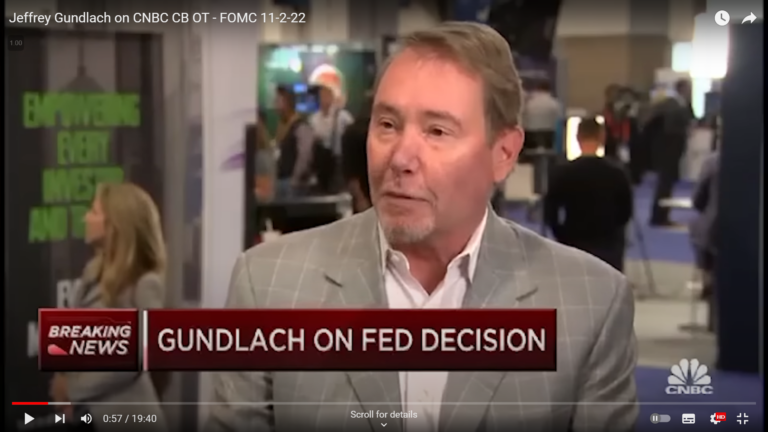
This is a closed-end fund run by the famous “bond king” Jeffrey Gundlach. It has $2 billion in assets under management.
This fund currently has a 10.47% yield, paid monthly. The fund holds mortgages/bonds that pay an average of 7% and uses 31% leverage to increase that to 10%.
The total return of this fund is not great historically, close to 0%. But I feel confident they’ll be able to maintain the distribution in the coming years. And when bonds become popular again, this fund will. It’s trading at a slight 5% discount to NAV.
I’ll hold this because I believe in the fund manager. Indeed, rising interest rates are not great for bonds, but I think the market has priced in most of the future increases.
The Fed needs to “talk down” inflation and make it seem like rates will rise higher than they really will. It’ll be hard for The Fed to raise their overnight rate to above 3%, and the bond market has priced that.
The real problem is that The Fed is selling off its inventory of t-bills, and I have no idea how the market will react to that.
- Status: MEDIUM RISK
ERH – Allspring Utilities and High Income Fund ETF (3.2% of Portfolio Value)
This is a closed-end fund that focuses on utilities and energy. I suspect the coming years (2023-2024) will involve high-priced energy and a good way for energy companies to profit.
This fund currently has a 7.29% yield, paid monthly. This is lower than other funds, but I think the yield is sustainable. It’s trading at a slight 5% discount to NAV.
The stock price has remained steady over the past five years at $12-$13, so I believe the fund will not lose any value. The “Total Return” of this is 7% over the past five years.
- Status: MEDIUM RISK
FNGS – Bank of Montreal MicroSectors FANG+ ETF
I have my doubts about this one.
This is the fund I ended up buying when I thought the technology companies would bounce back quicker than the broad market. It contains 10 stocks in equal weightings – Facebook, Google, Apple, Amazon, Alibaba, Baidu, Netflix, NVIDIA, Tesla, and Twitter.
I am currently profitable on this, and I might sell it. I am not sure.
My thesis on when the stock market will recover does not seem to be holding up. So if the thesis is proven wrong, what do you do? Sell.
- Status: HIGH RISK
IFN – The India Fund Inc ETF (4.3% of Portfolio Value)
I believe India is the next China. It’s an ascendant economy. And in 10 years, 20 years, it will dominate in Asia, next to China and Japan.
This fund currently has a 10.56% yield, paid quarterly. The yield varies and is not fixed, however. It’s trading at a slight 7% discount to NAV.
I will have to see how this pays out quarter-to-quarter, but I will hang on to this. This thesis will likely be true. Hopefully, IFN is a good way to play that.
- Status: LONG-TERM HOLD
INTC – Intel (6.7% of Portfolio Value)
Ah, man. Intel really hurts. I am down 16% in this. I could have sold it on the day they announced bad earnings and been down only 9%. But it’s been falling since then.
It pays a 4.4% yield, but the question is… is the yield safe? At what point does Intel cut the yield to invest in their fab plants and growth again?
Intel is a name brand. It was a pioneer in chip making. It *could* rise again like a phoenix from the ashes. But am I the guy to take a risk on it?
My thesis on this stock does not seem to be holding up. So if the thesis is proven wrong, what do you do? Sell.
- Status: HIGH RISK
JPM – JP Morgan (2.8% of Portfolio Value)
It’s a US bank. Pays 3.49%. I might have to sell this, too, since owning an individual stock like this seems risky. I’m breakeven with this.
- Status: MEDIUM RISK, going into a recession
TROW – T. Rowe Price (2.9% of Portfolio Value)
It’s an investment company. Pays 3.91%. I might have to sell this, too, since owning an individual stock like this seems risky. I’m down 2% with this.
- Status: MEDIUM RISK, going into a recession
BNS – Bank of Nova Scotia (4.5% of Portfolio Value)
I thought this was one of the “best values” in Canadian banks. But then it’s the one with the worst earnings report last week. I’m down 6% with this. It pays 4.93% per year, which is a decent yield. Canadian banks are pretty solid, so I’m not so worried. But maybe I have this stock in my other ETFs like ZWB (11.37% of that fund) and ZWC (4.93% of that fund).
- Status: LOW RISK, but maybe I don’t need it
CM – CIBC (3.7% of Portfolio Value)
Another Canadian bank. It had decent earnings, I think. Slightly up or break even. Pays 4.93% as well. Canadian banks are pretty solid, so I’m not so worried. But maybe I have this stock in my other ETFs like ZWB (12.68% of that fund) and ZWC (5.04% of that fund).
- Status: LOW RISK, but maybe I don’t need it
GWO – Great West Lifeco (6.0% of Portfolio Value)
A Canadian life insurance company. Pays 6.21% yield. I am slightly up with this stock. A low P/E (9.7x). Over $10B per year of free cash flow. This company makes money.
- Status: LOW RISK
HYLD – Hamilton Enhanced U.S. Covered Call ETF (7.6% of Portfolio Value)
A relatively new ETF to the market and a new addition to my portfolio.
The price dropped shortly after I bought it, so I bought more.
It pays a strong 12.23% monthly yield. I’ll have to keep an eye on this one and see if the stock price can stay relatively stable compared to the S&P 500.
- Status: HIGH RISK
IGM – IGM Financial (5.4% of Portfolio Value)
A Canadian life insurance company. Pays 6.17% yield. I am slightly up with this stock. A low P/E (8.9x). Currently, the company makes $600M to $800M per year in free cash flow. Gonna keep an eye on that.
- Status: MEDIUM RISK, going into a recession
MFC – Manulife Financial (10.8% of Portfolio Value)
This is my biggest holding. I am currently profitable on this, but it wasn’t always true.
It yields 5.86%, and has a 5.9x PE ratio. It has decent profit margins but is not currently growing. But makes $21B per year in free cash flow.
Over the past five years, the stock chart has been steady. It was trading at $25 five years ago and $23 today. Not much movement up or down.
- Status: LOW RISK
PZA – Pizza Pizza (4.7% of Portfolio Value)
This is the safest individual stock that I own. It is up 11% from where I bought it and pays a delicious 6.35% yield. I don’t think Pizza will be at risk during a recession.
- Status: LOW RISK
ZLB, ZLU – BMO Low Volatility ETFS (4.8% of Portfolio Value)
I bought these when I was looking for a place to park cash. Sometimes I sell it when I need funds to buy other things. These are both profitable, up 4% from where I bought them. So far, they do well as “low-vol” investments because they don’t go down as much on red days.
ZLB pays 2.55%, which is kinda low. The US fund ZLU pays even less – 1.84%. But safe place to park money.
- Status: SAFE
ZPR – BMO Laddered Preferred Shares ETF (2.8% of Portfolio Value)
Preferred Shares are like bonds. Since the company is paying a dividend on those preferred shares before the common shares, it’s considered a very safe form of dividends. ZPR pays 5.29% and seems like a pretty safe place to park money.
- Status: SAFE
ZWP – BMO Europe High Yield Covered Call ETF (2.7% of Portfolio Value)
Europe is a little shaky right now. I have a short position against European stocks in another account. So maybe I shouldn’t be long and short at the same time.
It does pay 7.4% which is great.
- Status: HIGH RISK, should sell
ZWB, ZWC, ZWU – BMO High Yield Covered Call ETFs (11.5% of Portfolio Value)
These are banks, utilities, and high dividend Canadian companies.
I like the BMO ETFs very much. They are solid, reliable, and have no risk of missing payments. These ETFs pay 5.5%-6.6%, which is not crazy high.
- Status: LONG-TERM HOLD
VTI – Vanguard Total Stock Index Fund ETF (9.7% of Portfolio Value)
This ETF holds every company listed on every US stock exchange, from large to small.
This should just be a long-term hold, for life even. It’s the total stock market. The US economy. In 10 years, it’ll be up. It doesn’t pay much of a dividend, but this is just capital in the US economy, which has outperformed every other large economy globally.
- Status: LONG-TERM HOLD
Summary
So from this, I can see that I’m fairly happy with most of my holdings.
- I may not need to own the individual banks CIBC and BNS since I own ZWB and ZWC. So I will sell both banks shortly.
- I should get out of the Europe fund just because I’m currently short it in another account.
- Intel is super-volatile, and I should probably cut down its weight or sell out of it.
- I think I can take the profit in FNGS since my thesis has changed.
- The investment companies – IGM and TROW – the 20-year bull market is coming to an end, and we’re entering into a 3-4 year bear market…