
Is It Time to Get Out of Stocks?
It seems like everywhere you look, people are expecting a recession.
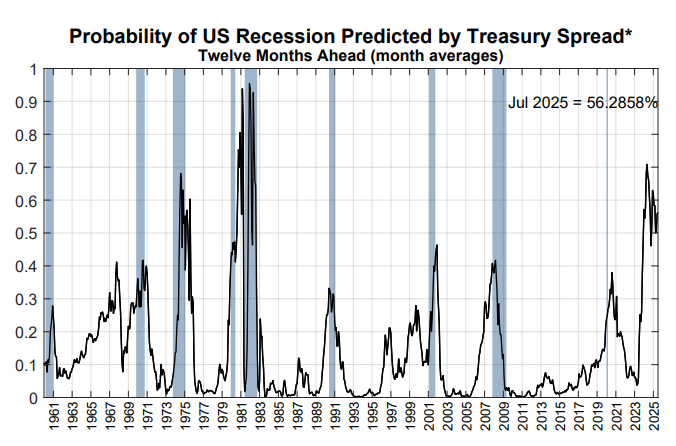
The US Federal Reserve puts the probability of a recession within the next twelve months at 56%.
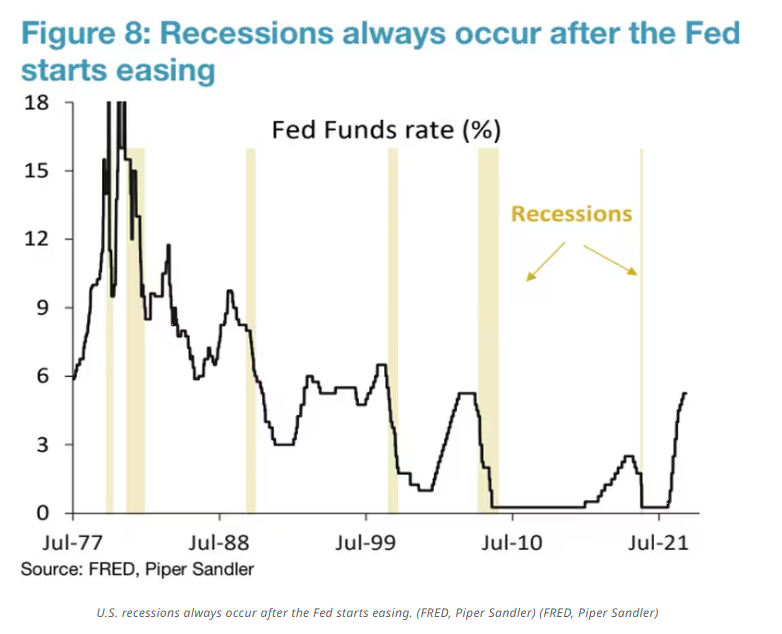
As you can see, there is a fairly high correlation between interest rate cuts and recessions within a couple of quarters. I’m not saying that interest rate cuts cause recessions, but they are highly correlated.
The US Federal Reserve looks at leading indicators of the economy and cuts rates when it sees weakness. In this way, the Fed cutting interest rates is a good predictor of economic weakness and has shown no ability to prevent it.
The Fed can’t stop a recession without drastic quantitative easing similar to 2020/2021.
So if the Fed cuts interest rates in September, as expected, you should expect a period of economic pain in a year or so after that.
There seems to be a relationship (somewhat) between recessions and bear stock markets.
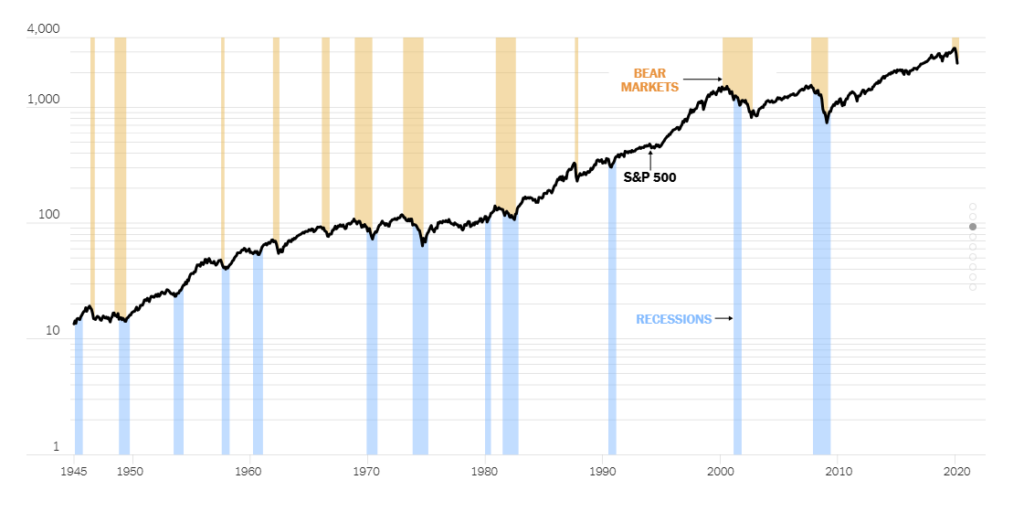
Stock markets tend to reflect investors’ expectations about future performance and not necessarily the current performance of the economy. That’s why stocks went crazy up during COVID even as businesses were seeing big shifts in consumer behavior, travel restrictions, and such.
So the question is, assuming an interest rate cut this fall (the bond market predicts a 100% chance of one in 2024), will there be a stock crash in 2025?
Is it worth going to cash in 2025 and waiting out the “inevitable” crash?
We’re told that it’s impossible to time the market, yet we can see in the charts that:
- The Fed cuts rates for the first time
- Recessions tend to happen a few months after that
- Stocks tend to fall during recessions
Is that enough to make an economic gamble on?
And how do you time that? Do I wait for the Fed to cut rates (in case they don’t) before selling my first share of stock? Do I wait for the market to fall 20% from its highs before buying back in?
Others Disagree
This hypothesis is not universally supported.
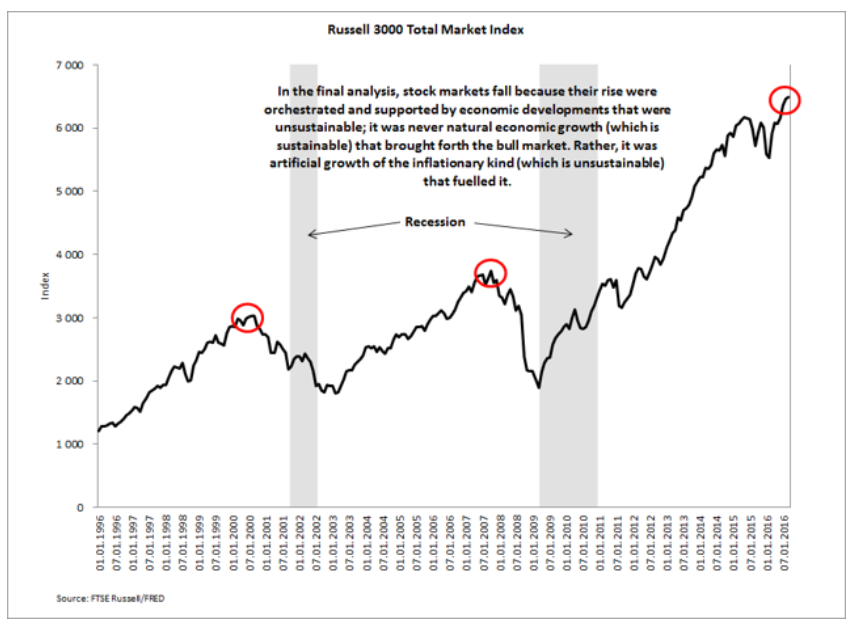
Others say that the stock market crash causes recessions, not vice versa. Companies’ values get overinflated and must be corrected when reality sets in. Investors expect earnings always to exceed predictions and punish the stocks that don’t. In a way, it’s a series of manias followed by attempts at being rational for a time.
So… should I go to cash?
Conclusion
I’ve decided to increase my cash holdings by 2-3%, and I’ll stop adding to the market as new money comes in.
I know that doesn’t seem like a lot, but I want to avoid the trap of moving so much money into cash that I miss the best days on the market. Given how much the S&P has rebounded since “the crash,” this seems like a good plan for now.
But I won’t invest any more for a while.