10 Stocks to Own for Life
I watched an interesting Youtube video the other day.
The author made two great arguments:
- In your life, you only need a few really outperforming investment ideas
- The key to great success long term is never to sell anything
I know that this channel loves Warren Buffett, so it quotes him on these two points. Berkshire Hathaway (of which I now own a bit) has basically doubled the return of the S&P 500 over the past 60 years because he owns significant shares of just a few key companies, such as Apple, Coca-Cola, and American Express. He bought those great businesses and never sold them.
It’s safe to say that, without those three purchases, we’d not be worshipping Warren Buffett today nearly as much as we do or even thinking of him. Three decisions made all the difference.
I wonder if I can do something similar. I wonder if I can buy only ten companies and hold on to them for the rest of my life.
The video even makes the case that price doesn’t matter if you hold for decades. Even if I think $LVMH is expensive with a P/E of 32, if I believe the company is going nowhere and will always make money hand over fist, I should buy it and hold it for the next 30+ years.
So the question is, what companies do I have enough conviction in that will continue to be massively profitable in 20-30 years?
- LVMH Moet Hennessy Louis Vuitton
- Microsoft
- Visa
- L’Oreal
- McDonald’s
- BlackRock
- S&P Global
- Hershey
- Union Pacific
Those are nine pretty solid companies.
I have a few rules when selecting them:
- They are leaders in their space and household names
- None of them are chemical or drug companies that will potentially be sued out of existence
- None of them are based in China or Russia – the financial numbers can be trusted
- None of them are low-margin businesses like airlines, car makers, newspapers, and companies that have traditionally gone bankrupt during recessions
- None of them are technology companies that will not be leaders in their space in 20 years
- None of them are speculative based on some future technology being adopted (AI, robotics, self-driving, etc)
- They generally have lots of cash and can weather storms that last years
- They might be considered expensive, but they have substantial net profit margins
I could also choose a second company in many of these spaces if I wanted to. I can add in Hermes, Apple, Mastercard, Estee Lauder, or the CNR or CP railroads. It’s a way of diversifying a little more. Like Mastercard is growing much faster than Visa, but is also more expensive P/E wise.
LVMH Moet Hennessy Louis Vuitton
Will expensive fashion ever go away? Does the idea of spending $5K, $10k, or $20k on a handbag ever go out of style? I can’t see it. Plenty of these companies are out there – Prada and Hermes being another two. But LVMH is the market leader and owns so many top brands. I should have known this and bought the stock 20 years ago. Or even at the depths of COVID.
LVMH has a yield of 1.4%. They sell $79 billion annually and have a gross profit of $54 billion. They keep $20 billion after expenses in net profit. 17.8% net profit margin. They print money. They’re growing at a 10% year-over-year rate. They have $10 billion in cash. There’s no stopping LV.
Microsoft
Microsoft is a pure tech company, true. Technology is not always the safest bet long term. HP, IBM, and Dell would have been poor investments over the past 20 years as new players took over.
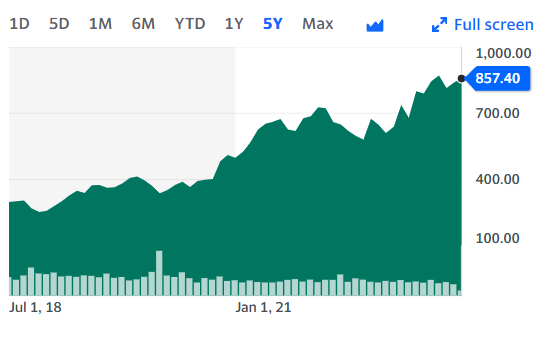
They are the dominant player in operating systems, office software, and the cloud. MSFT has a yield of 0.8%. $204 billion of revenue annually, and $139 billion of that is gross profit. They keep $82 billion after expenses. Their net profit margin is 33%. They are growing revenue at 13% year-over-year. They have $100 billion in cash.
I can’t see Microsoft messing up. Google and Apple are in similar situations. But I think Microsoft is the safest play in technology.
Visa
I had Visa as a client once. Those guys really print money. All they do is run advertising. The banks do all the work. But is Visa ever going away? Will any payment method be invented better than Visa? I don’t think so.
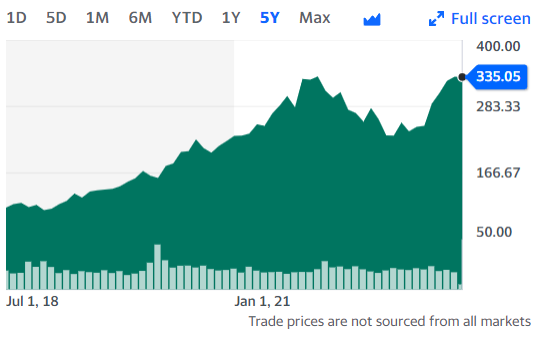
V has a yield of 0.8%. $30 billion in revenue, and they get to keep $24 billion in gross profit. It costs them $4 billion to run their business, and they keep $20 billion as net profit at the end of the year. They have $16 billion in cash.
Think about that for a second. $30 billion in revenue, and they keep $20 billion after all expenses are paid! Incredible!
Their net profit margin is 49%, and revenue grows at 11.8% per year.
L’Oreal
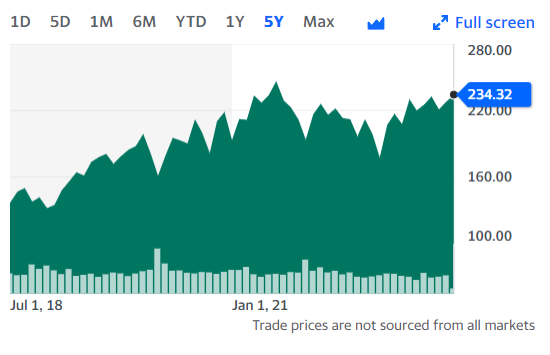
OR.PA has a yield of 1.5%. L’Oreal made $38 billion in revenue in the last twelve months and kept $27 billion as gross profit. It costs them $20 billion to run the business, so they kept $7 billion after all expenses. Their net profit margin is 14.9%. They have been growing revenue at 8% annually. They have $2.6 billion in cash.
Like fashion, beauty won’t go out of style. People will need their makeup and skincare products well into the future.
McDonald’s
I’ve liked McDonald’s as a company for a long time but always thought the stock was expensive and the dividend was low. But, if we stop caring about it being expensive or not, how do they make money?
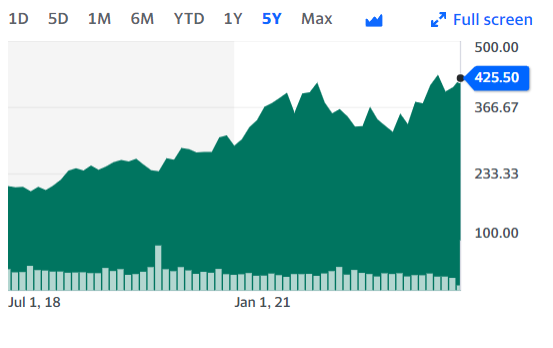
MCD has a yield of 2.1%. McDonald’s made $23 billion in the last twelve months and kept $13 billion as gross profit. It cost them $2 billion to run the business, leaving them around $10 billion of net profit. This leaves them with 29% of net profit margin. Revenue is only growing at about 4% per year. They have $3.7 billion in cash.
They may not be growing, but they can charge a decent price for their burgers and fries, and people will pay. Besides their executives having affairs with their staff, McDonald’s avoids most controversy.
BlackRock
Blackrock is an investment company that invests other peoples’ money.
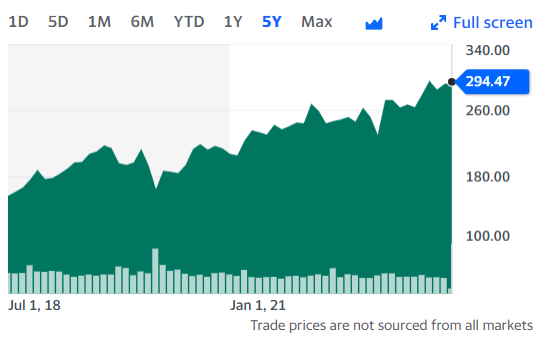
BLK has a yield of 2.9%. They made $17 billion in total revenue, $8.7 billion in gross profit, and kept $6.4 billion as net profit. Their profit margin is 28%. They have $5 billion in cash.
S&P Global
Do you know the S&P 500? Well, this is S&P.
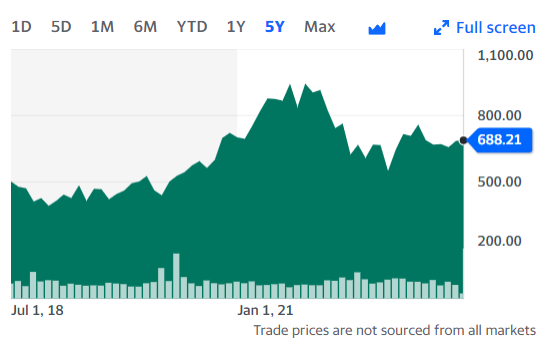
SPGI has a yield of 0.9%. S&P made $11 billion in total revenue, earned $7.4 billion in gross profit, and kept $3 billion as net profit. This gives them a profit margin of 23%. They also have $1.4 billion in cash.
Hershey
Chocolate. Is chocolate going away? Will people stop buying it? No.
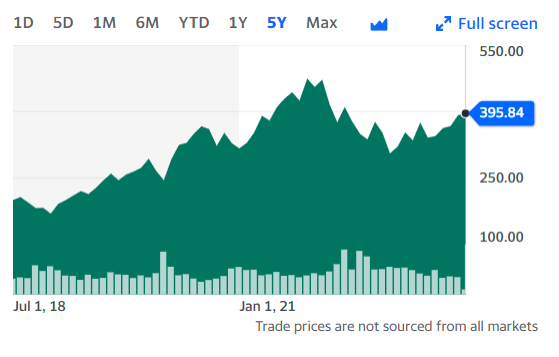
HSY has a yield of 1.6%. $10.4 billion of total revenue in the past twelve months and $4.5 billion of gross profit. After expenses, they keep $2.2 billion in net income. This leaves a profit margin of 15%. They have been growing revenue at 12% year-over-year. They have $468M in cash.
Union Pacific
UP is a railroad in the United States. Railroads are unique in that they are not building any more rail lines, and no new competitors are entering the business. But it’s pretty much a monopoly. If you want to ship items across the country, you can ship them by rail car. Or drive them by truck. Or fly them. Railroads aren’t going away and aren’t controversial.
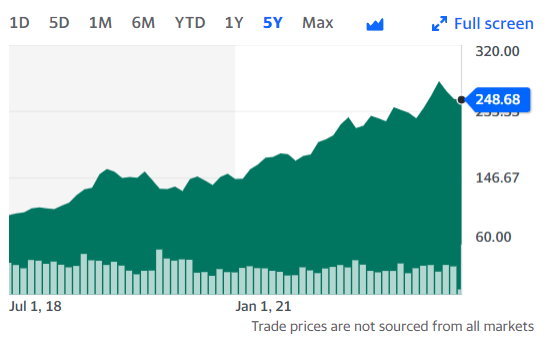
UNP has a yield of 2.5%. Total revenue of $24.8 billion, gross profit of $11.2 billion, and net profit of $9.9 billion. A net profit margin of 27%. Revenue is not growing much at 3% yearly, but it’s steady. They have $1 billion in cash.
Conclusion
What if I was to start a new portfolio of these “buy and hold forever” stocks? I can put aside a percentage of my assets to invest, knowing that I will never sell those. They will go up and down, but the price doesn’t matter. These companies can generally raise their prices with inflation and don’t have much risk of losing revenue on the whims of the public.
As mature, profitable companies, most of them pay a dividend. So it stays within my “dividend” focus. But instead of owning “high yield ETFs,” these are operating businesses with staying power.
I might consider peeling off 10% of my portfolio and putting the money in these ten companies to hold on to them forever.
The challenge for me is sticking to this. My investment accounts have not traditionally been stable. I mentioned previously selling all of my investments in order to buy a new house before selling my last one. Sometimes I make big moves (like buying technology stocks) and then feel the urge to sell for a profit as soon as it goes up faster than expected. Or buying Intel and selling at a loss as I lose confidence in the company.
These stocks have to be held through ups and downs. I basically shouldn’t even look at their values. I shouldn’t track them even to avoid the temptation to make adjustments. That will be hard.
And what to do with additional capital? If I invest $10 today and want to invest another $10 next year, should I? Is Warren Buffet buying more Apple in 2023, or did he buy it in 1993 and hold on to it?
I will think about it. It’s tempting.